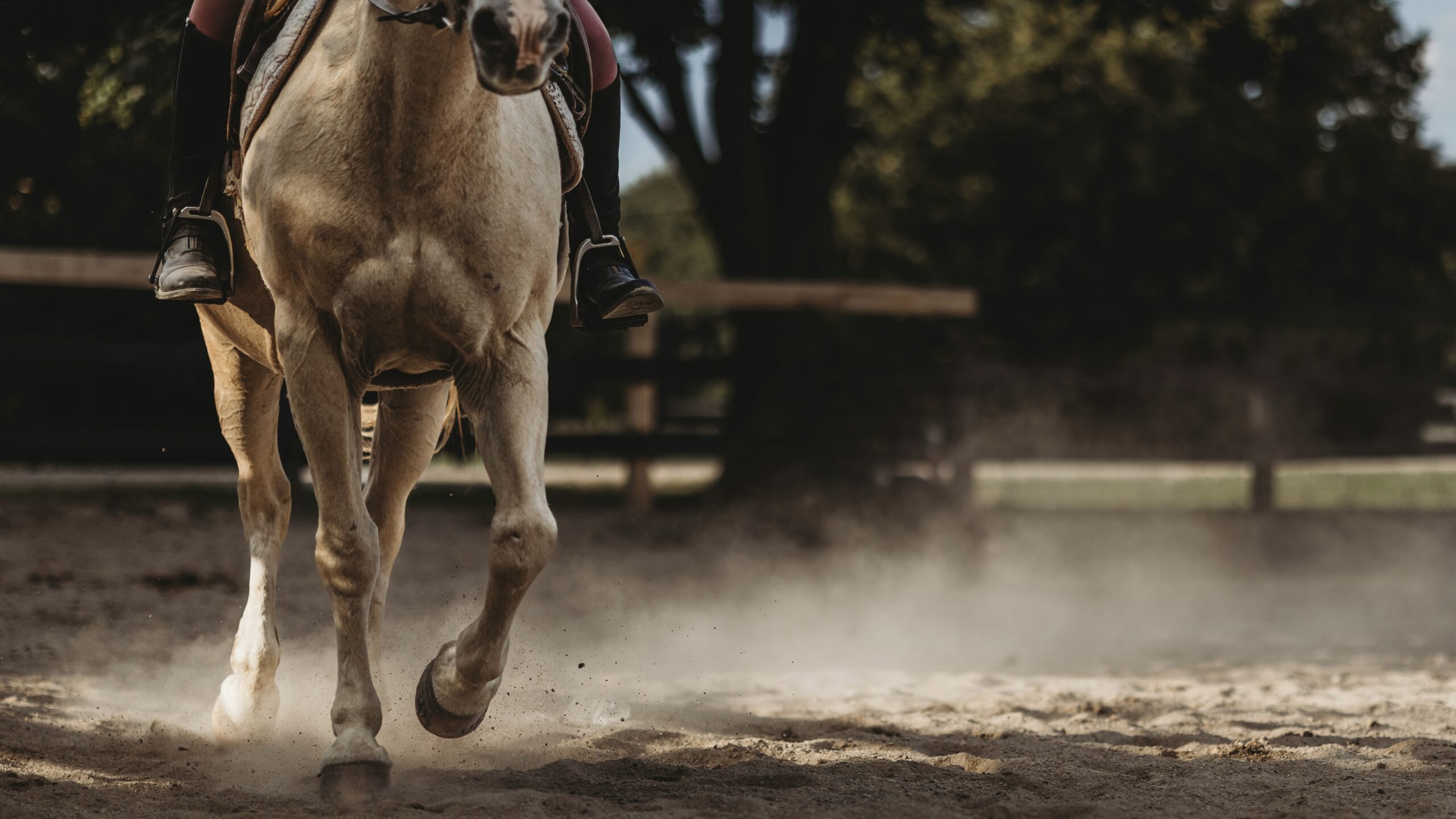
When I practice lateral work, I see how each movement transforms my horse’s body. The muscles start to develop evenly, the movements become more fluid, and the overall balance improves. Every step sideways strengthens the entire muscular system — from the hindquarters to the shoulders and the core. Through science and feel, I understand now: lateral work is one of the most complete training methods for building a strong, supple, and coordinated horse.
Building Power from Behind
The power of every stride begins in the hindquarters. The gluteal muscles, located along the top and sides of the rump, are the strongest muscles in my horse’s body. They generate propulsion and support the spreading of the hind legs. When I ask for lateral movement, these muscles contract and stretch alternately, increasing strength, endurance, and elasticity.
At the same time, the abdominal muscles play a stabilizing role. When the hind legs cross, the rectus abdominis and oblique muscles engage to lift the spine and support the back. According to veterinary biomechanics research, a well-developed abdominal wall reduces pressure on the lumbar region and prevents tension in the long back muscles. This means that with every correct lateral step, my horse becomes stronger through the core — not just more athletic, but also healthier.
Developing Balance and Stability
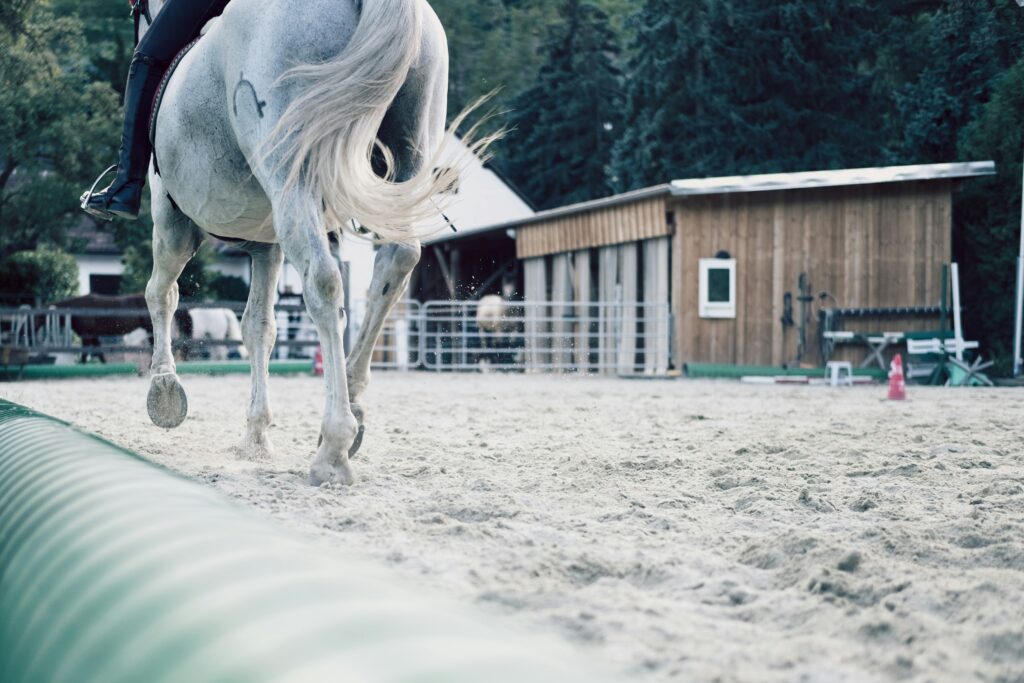
The inner thigh muscles, or adductors, activate whenever my horse pushes off the ground with the hind legs. These muscles are essential for coordination. They stabilize the pelvis and prevent the horse from tipping sideways during complex exercises. I feel this balance most when we ride shoulder-in or travers — the body moves like a wave, perfectly aligned and centered.
While the hindquarters drive, the chest and pectoral muscles support the crossing of the front legs. They work together with the abdominal muscles to lift the chest and free the shoulders. Over time, this symmetry builds straightness and harmony between the front and back of the body.
Strengthening the Shoulder and Neck Area
In every lateral exercise, I notice how the trapezius and rhomboid muscles near the withers strengthen. These muscles control the lift and spread of the front legs and stabilize the neck’s base. The brachiocephalicus and splenius muscles in the upper neck also become more defined. They help lift the shoulders and contribute to a lighter forehand.
Did you know?
Biomechanical studies confirm this: when a horse performs correct lateral work, it activates the deep stabilizers around the withers, improving posture and balance. I can see it in my horse’s outline — the frame becomes prouder, yet relaxed. The energy flows forward instead of downward.
Enhancing Flexibility and Preventing Tension
Lateral movements stretch and contract the long back muscles (longissimus dorsi) in alternating patterns. This gentle sequence improves spinal flexibility and keeps the back elastic. As my horse bends, the muscles on one side stretch while the others engage to support the curve. This balanced motion reduces stiffness and increases suppleness throughout the topline.
Equally important, the hip flexors and gluteals gain range of motion. This flexibility prevents joint tension and supports long-term soundness. A supple hip means smoother transitions, a freer walk, and a more balanced trot. In the long run, this kind of training keeps my horse moving with ease, even in older age.
The Science Behind Strength and Harmony
Research in equine biomechanics shows that controlled lateral work strengthens both the superficial and deep muscle layers. The movement patterns increase blood circulation and improve neuromuscular coordination — the fine-tuned communication between nerves and muscles. In practice, I feel it as lightness, responsiveness, and balance under the saddle.
Conclusion
That is why I always include these exercises in my training plan. Lateral work not only builds strength but also develops flexibility, symmetry, and trust. My horse learns to use every part of the body with awareness and control. In return, I learn to guide with feel, rhythm, and precision. Through consistent and correct lateral work, my horse becomes not just stronger — but more complete, connected, and confident.