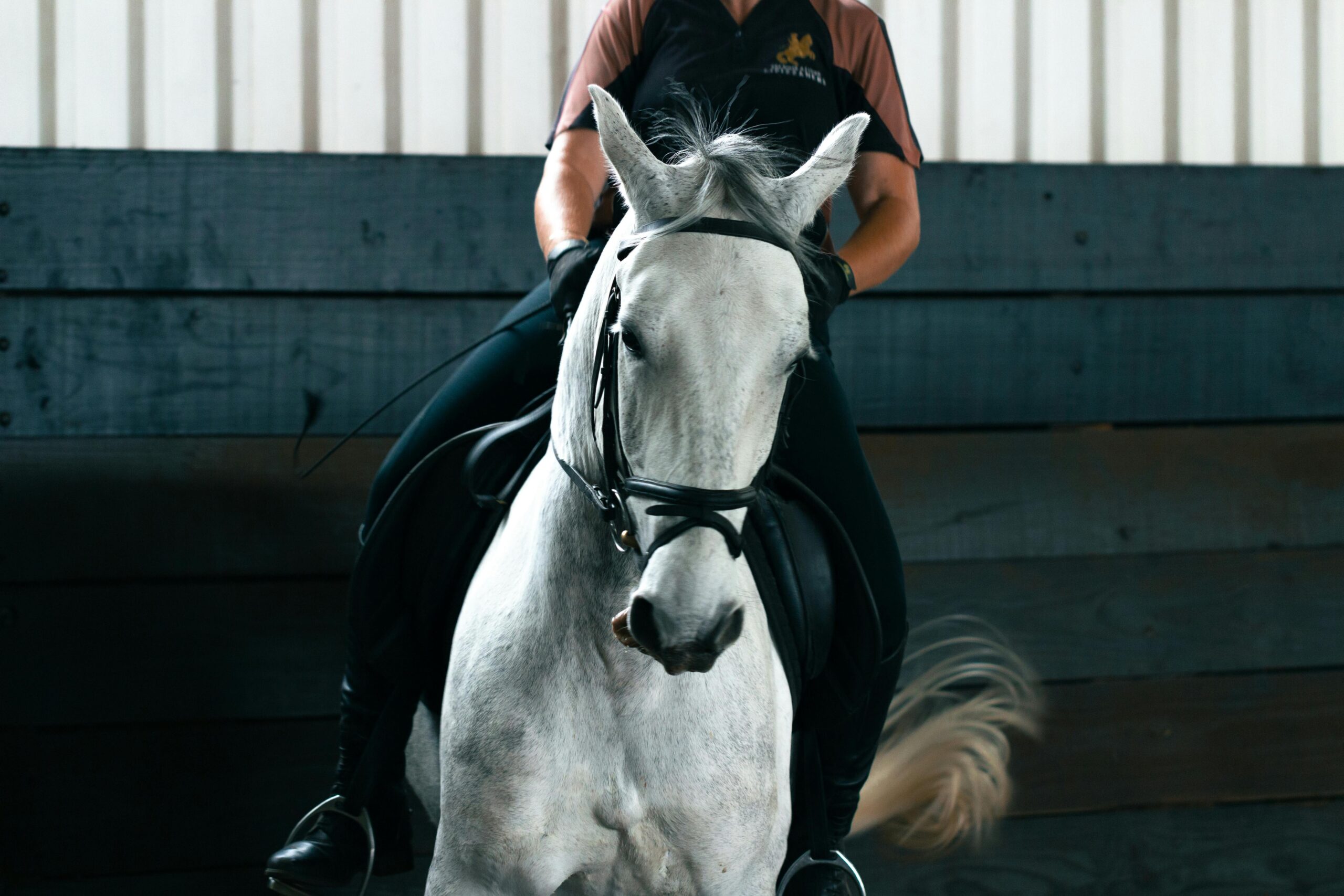
Collection for beginners stars with understanding balance — not force. Before a horse can truly carry itself, it must first learn how to use its body in harmony. Spiraling circles are one of the most effective classical exercises to achieve this. They gently teach the horse to step under, lift the forehand, and engage the hindquarters. For the rider, they build feel, timing, and awareness — the very foundations of lightness.
This training plan for collection for beginners assumes your horse is sound, comfortable at walk, trot, and canter, and already understands basic bending and contact.
Week 1 – Establish Rhythm and Suppleness
Goal: Create consistent rhythm, relaxed bend, and a soft connection.
Focus gait: Walk and working trot.
Exercises:
- Warm up on a 20-meter circle in walk, changing direction often.
- Add gentle spirals: ride from 20 m to 15 m and back out.
- Encourage inside flexion with your inside leg at the girth and light outside rein.
- Keep the rhythm steady — no rushing, no slowing.
- End each session with long, low stretching on a large circle.
Feel for: A soft, swinging back and even contact on both reins.
Avoid: Pulling the horse into the bend — always use your leg instead to create it.
Week 2 – Improve Engagement and Balance
Goal: Strengthen the hindquarters and improve balance on smaller circles.
Focus gait: Trot with short canter intervals (if balanced).
Exercises:
- Ride large (20 m), medium (15 m), and small (10–12 m) circles in sequence.
- Leg-yield out from the smallest circle to the largest.
- Keep forward energy — the hind legs should stay active.
- Introduce brief trot–walk–trot transitions within the circle.
Feel for: The horse lowering the croup slightly and taking more weight behind.
Avoid: Losing rhythm, leaning inward or collapsing your inside hip.
Week 3 – Build Power Through Transitions
Goal: Use transitions to enhance engagement and self-carriage.
Focus gait: Trot–canter transitions on circles.
Exercises:
- Spiral in at trot, transition to walk on the smallest circle, then trot out again.
- Alternate between large circles in canter and smaller circles in trot.
- Maintain light, elastic contact — never hold the horse up.
- Ask for a few strides of more collected trot before spiraling out.
Feel for: A springy, uphill feeling and a light forehand.
Avoid: Thinking “slow”; collection is controlled power, not reduced speed.
Week 4 – Introduce Collected Moments
Goal: Feel short moments of true collection through self-balance.
Focus gait: All three gaits, depending on the horse’s level.
Exercises:
- Begin with a supple warm-up at walk and trot on large circles.
- Spiral in, ride a few steps of more collected trot or canter (more uphill, more sit), then spiral out again.
- Add shoulder-fore on the circle to refine alignment.
- Reward generously for even small efforts to shift weight to the hindquarters.
Feel for: Short, light, powerful steps and a soft, “waiting” feeling in your horse.
Avoid: Over-riding or forcing — collection develops through strength, not pressure.
Final Thoughts
By the end of week 4 of the training plan for collection for beginners , your horse will not yet be in full collection — but you will have built the physical foundation and the mental readiness for it. Spiraling circles work refines your feel, balance, and timing. From here, you can start integrating more advanced lateral work like shoulder-in and transitions within gaits to continue developing true collection.