A turn on the forehand is one of the most valuable exercises for beginners in dressage. When I first started dressage, I quickly discovered that it may look simple, yet it builds the foundation for control, trust, and balance. It is one of those essential lessons that teaches me: precision begins with small movements.
Through this exercise, I learn how to guide my horse with subtle, coordinated aids. Here’s what it requires — step by step — from both:
1. Understanding the Goal
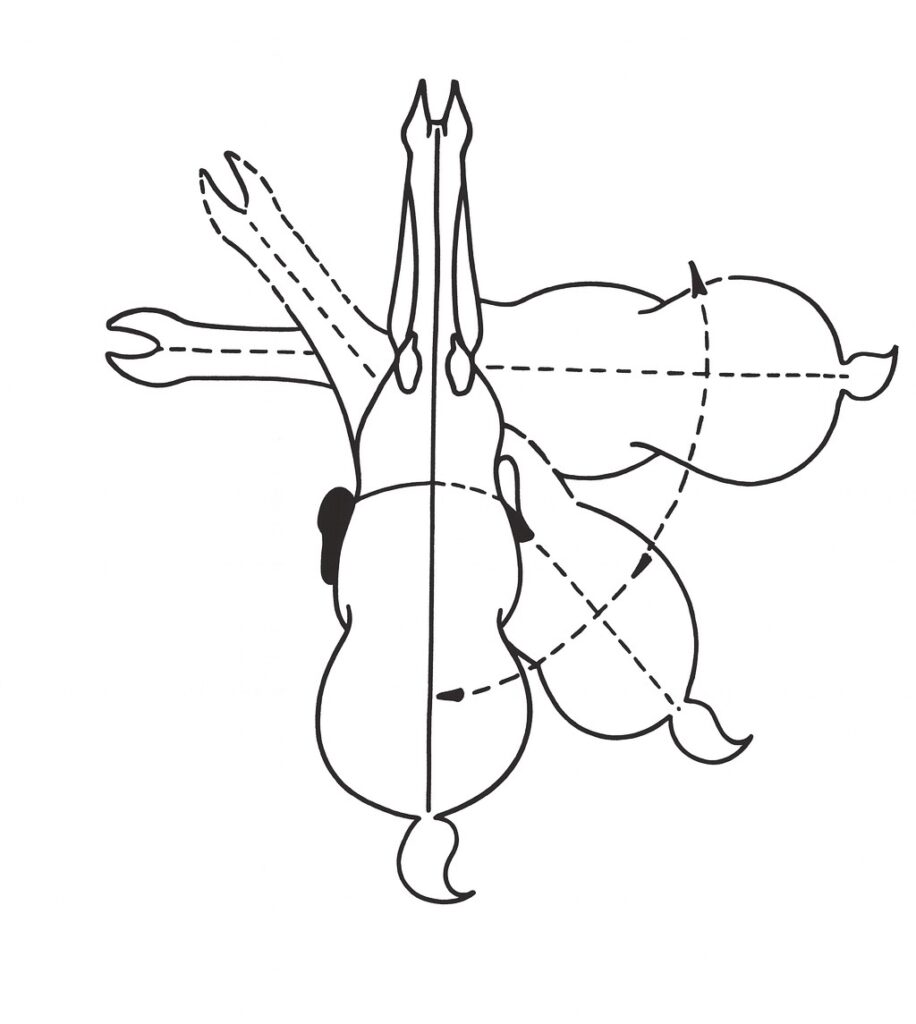
I use the turn on the forehand to teach my horse a simple but essential idea: move the hindquarters away from my inside leg. As the hindquarters travel on a larger circle, I guide the forehand around a very small circle on a nearly fixed point. I ask my horse to yield to my leg and step sideways with calm precision. At the same time, I build a better feel for balance, rhythm, and clear aids. I also feel how the hindquarters respond under the saddle and how each step affects the horse’s stability.
In addition, I improve my horse’s suppleness and balance through this exercise. Because I ride the movement step by step, my horse learns to carry itself without rushing. I also develop my horse’s body awareness, which supports correct coordination in lateral work. Throughout the movement, I keep my horse straight. I align the neck and the poll. I make sure my horse does not bend around my inside leg, because straightness keeps the biomechanics correct and clear.
2. Preparing the Horse and Myself
Before starting, I make sure my horse is calm, attentive, and ready to listen. I choose a quiet place with enough space. I sit centered in the saddle, with my weight evenly balanced. My reins are short but soft, and I make sure my legs stay relaxed. My body must remain centered because balance is everything in this exercise.
I start in walk on the track. Then I leave the track by two or three steps to create enough space. This prevents the wall from blocking the horse’s shoulders. Afterwards, I halt and breathe. I check my alignment. I make sure my shoulders stay parallel to the horse’s shoulders. At the same time, I position my legs with purpose: my active leg asks, and my passive leg provides support without pushing.
3. What It Requires from the Horse
- Understanding of leg pressure: The horse must know that the inside leg means “move sideways,” not “go forward.”
- Calmness and attention: The horse should stay relaxed and listen closely. Tension or rushing destroys the balance.
- Flexibility: The horse must bend slightly around the rider’s inside leg to keep the body curved.
- Engagement of the hind legs: The horse’s inside hind leg crosses in front of the outside hind leg, showing suppleness and obedience.
When the hindquarters move left, the right hind leg must cross clearly in front of the left one. When the hindquarters move right, the opposite crossing pattern appears. The correct crossing of the hind legs requires strength in the abdominal chain and flexibility in the hip and lumbar region. Over time, the horse improves balance around the center of gravity.
4. What It Requires from the Rider
I need an independent seat. To achieve this, I stabilize my core without gripping. To start, I stop my horse and keep light contact on both reins. My inside leg gives the sideways aid. My outside rein prevents the shoulders from collapsing outward. Meanwhile, my outside leg stays close to support straightness. I ask for one or two steps at first. When the horse crosses the hind legs smoothly, I praise immediately.
If the horse falls over the outside shoulder, I correct it immediately with a steady outside rein. If the horse backs up, I soften the rein and encourage forward intention. Because timing matters, I release the moment the horse answers correctly. As a result, the horse understands what I want.
- Clear aids:
- Inside leg: gives the sideways signal just behind the girth.
- Outside rein: prevents the horse from moving forward.
- Inside rein: keeps a soft flexion at the poll.
- Outside leg: guards the horse’s hindquarters to prevent them from swinging too far.
- Timing and feel: I must coordinate leg and rein aids smoothly — never forcefully — so the horse understands the rhythm of each step.
5. Common Beginner Mistakes
At the beginning, I made many small errors. I leaned forward, or I pulled too much on the reins. My horse became confused. Now I know: less is more. I must guide with precision, not strength. If my horse steps backward or loses balance, I calmly stop, reset, and try again. Repetition with patience makes the difference. Sometimes, I also forgot to maintain forward intention. Without that mental forward flow, the horse may freeze, back up, or step unevenly. To prevent my horse from escaping over the inside shoulder. I check straightness before every step.
- Using too much rein and stopping the horse completely.
- Forgetting to release the inside leg after each step, which can block movement.
- Losing rhythm or balance by leaning forward or backward.
- Asking for too many steps at once; it’s better to reward one or two good ones first.
Although these mistakes appear frequently, they are easy to correct with awareness.
6. Why the Turn on the Forehand Matters
The turn on the forehand is more than a basic exercise. It teaches subtle, clear communication between horse and rider. I learn to use precise aids. The horse learns to trust my guidance. Even young horses benefit, because the sideways response improves their understanding of the aids without stress. Because the movement encourages flexion of the joints, the horse becomes stronger and more supple. In addition, it teaches the horse to move away from leg pressure consistently. As a result, it improves balance, body control, and engagement of the inside hind leg.
Finally, it directly prepares me for more advanced movements such as leg-yield, shoulder-in, and eventually collection. Every time I practice, I notice my horse becomes lighter, more focused, and more in tune with me. The turn on the forehand improves:
- Responsiveness to leg pressure
- Suppleness and responsiveness
- Control before lateral work (like leg-yield or shoulder-in)
- Communication between horse and rider
Conclusion: Small Steps Lead to Great Progress
For me, the turn on the forehand is a quiet but powerful moment of training. It reminds me that control does not come from force but from harmony. The turn on the forehand strengthens my horse, improves communication, and refines my aids. I work with clear intention, consistent timing, and calm energy. When I take time to master it, I not only improve my technique but also strengthen the connection with my horse — step by step, turn by turn. As soon as the hind leg crosses correctly, I release, I praise, and I move on. This simple foundation prepares my horse for many advanced movements later in training.