When I first learned about hoof abscesses, I realized how quickly a healthy horse can become lame. A hoof abscess occurs when bacteria become trapped inside the hoof capsule, creating a pocket of pus that builds painful pressure. Because the hoof capsule cannot expand, even a small infection can cause intense discomfort. Understanding the signs, causes, and treatment options helps me protect my horse’s health before a minor problem turns serious.
Recognizing the Signs of a Hoof Abscess
I always pay close attention when my horse shows sudden lameness. Most hoof abscesses occur overnight — sometimes within twenty-four hours. The leg might swell, the hoof feels warmer, and I can detect a stronger digital pulse near the fetlock joint. Sometimes, I notice a foul smell or see fluid coming from the sole or coronary band. These warning signs tell me infection is building up and the hoof needs immediate care.
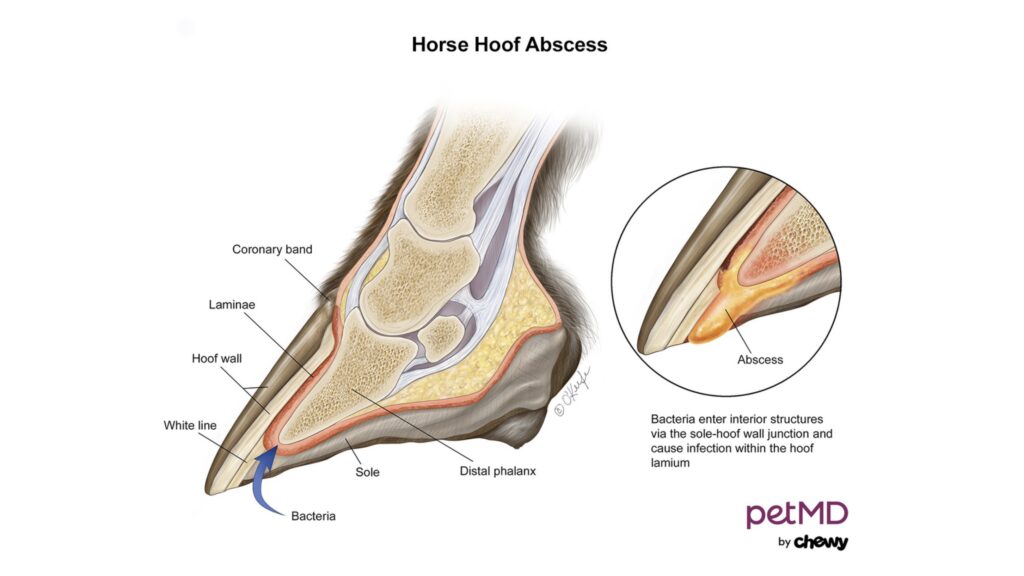
subsolar hoof abscess
This medical illustration shows a subsolar (sub-sole) hoof abscess, also known as a solar or submural abscess.
It forms beneath the sole of the hoof, where bacteria enter through tiny cracks or the white line at the junction between the hoof wall and sole. The infection becomes trapped inside the hoof capsule, creating pressure and pain as pus accumulates under the hard outer layers. It is one of the most common types of hoof abscesses seen in horses.
What Causes a Hoof Abscess
Weather changes often trigger problems. When conditions change from wet to dry or back again, the hoof becomes more brittle and prone to tiny cracks. Bacteria enter through these cracks and multiply. Poor hoof care, overgrown toes, or bruised heels can increase the risk as well. Even a small puncture from nail, stone, or any foreign object can puncture the sole and seal bacteria inside – the beginning of an abscess.
If I ever find something stuck in the hoof, I never remove it myself. That’s an emergency for a veterinarian, as deeper tissue or bone may be affected and X-rays may be necessary.
How Veterinarians Diagnose a Hoof Abscess
When my veterinarian examines my horse, he first asks about my horse’s daily routine and the last visit to the farrier. He checks for fever, swelling, and pain reactions. Using hoof testers, he gently presses on different areas until he finds the sensitive spot. Once he has located the abscess, the vet may open it with a hoof knife so the pus can drain. The release of pressure brings almost instant relief. If the abscess is deep or higher in the hoof, it may break through the coronet band on its own— a slower and more painful process for the horse.
Treating a Hoof Abscess
After drainage, keeping the hoof clean is essential. I usually soak it in warm water mixed with Epsom salt for fifteen to twenty minutes once or twice a day. Then I apply a drawing poultice and wrap the hoof with a protective bandage. The bandage should never be too tight around the coronet band.
Sometimes, my vet prescribes anti-inflammatory medication such as phenylbutazone or flunixin meglumine to reduce pain and swelling. In severe or chronic cases, antibiotics might be needed to stop deeper infection.
Recovery and Prevention
A mild abscess heals within a few days once it drains. However, deeper abscesses may take weeks or even months to fully close. I’ve learned that prevention starts with daily hoof care. I keep my horse’s environment dry and clean, pick hooves every day, and follow a consistent farrier schedule every four to six weeks. Good nutrition and balanced hoof trimming also reduce the risk.
If abscesses appear repeatedly, my vet checks for underlying issues like Cushing’s disease, which weakens the immune system.
Key Takeaway
Knowing what I need to know about a hoof abscess gives me confidence as a horse owner. It reminds me that early detection, proper drainage, and daily care make all the difference. Every horse deserves sound, pain-free steps — and that begins with understanding how to protect their hooves.
Hoof Abscess FAQs
How long does a hoof abscess take to heal?
Healing depends on the abscess’s depth and location. Shallow infections may clear in a few days. Deep abscesses can take weeks until drainage and hoof regrowth are complete.
What should I do after an abscess bursts?
Continue soaking with warm Epsom-salt water and reapplying clean poultices daily. Keep the hoof protected and dry until the opening seals naturally.
Can a horse stay lame after the abscess bursts?
Yes. Even after drainage, mild inflammation can persist for several days. With continued cleaning and care, lameness should disappear as the tissue recovers.
How can I prevent future hoof abscesses?
Pick hooves daily, maintain regular farrier visits, and keep the environment clean and dry. Avoid sudden changes in moisture and remove sharp debris from paddocks.
Illustrations: Wilhelm Ellenberger and Hermann Baum, Public domain, via Wikimedia Commons