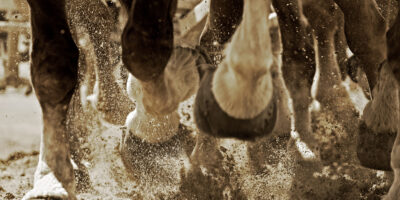
The outer structure of the horse hoof is an intricate system of strength, balance, and constant renewal. Designed to endure enormous forces, it adapts naturally to different terrains and environmental conditions. Every part of the hoof works together with precision, supporting movement and stability. Because it continuously regenerates, its health depends on regular, proper care. When I understand how the hoof is built, I can prevent many problems before they start. Without consistent attention, the hoof quickly becomes susceptible to painful infections and serious diseases.
The Hoof Capsule and Wall
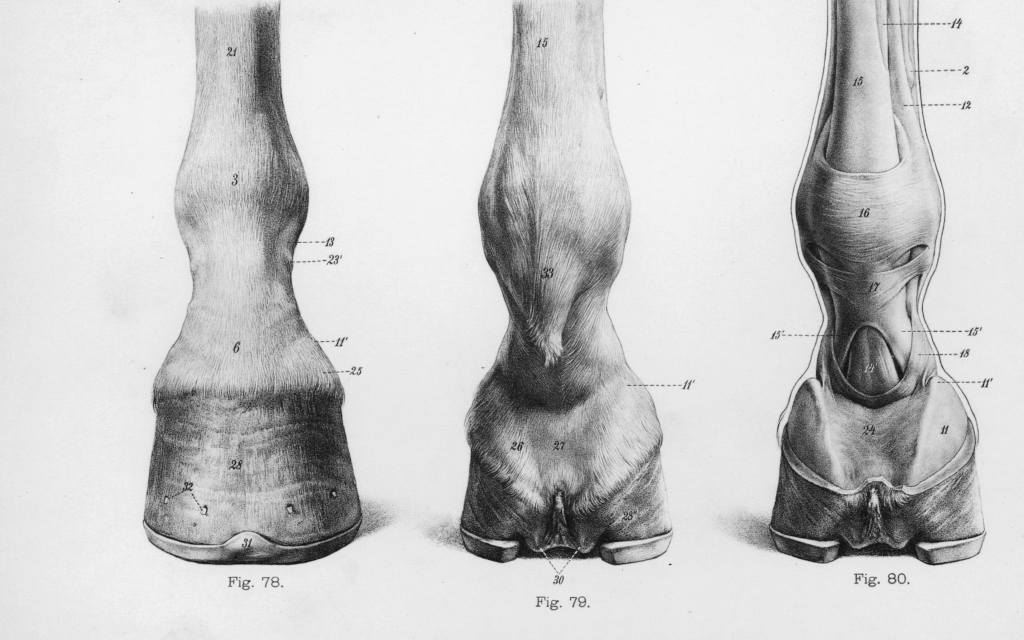
The hoof capsule forms the outer, visible shell of the hoof. It consists mainly of horn tissue, similar to our hair and fingernails, yet much stronger.
The hoof wall makes up most of this capsule. It has three layers (the stratum externum, the stratum medium, and the stratum internum) that protect the inner, sensitive structures from pressure and injury.
Special Fact
The three layers are called the stratum externum, the stratum medium and the stratum internum.
Coronet Band and Growth
At the top, the coronet band marks where new horn grows. It acts as a biological growth ring, constantly generating new horn that pushes downward. Any injury to this zone can permanently alter hoof shape or horn quality. Because the hoof grows approximately one centimeter per month, damage becomes visible over time as horizontal ridges or cracks.
Sole, White Line, and Frog
The sole forms the bottom surface of the hoof. It protects the sensitive, nutrient-rich tissue that lies beneath the hoof wall, similar to the “quick” of a human fingernail. It also supports the hoof’s internal arch. A healthy sole should be slightly concave, firm, and dry to the touch.
Special Fact
The outer edge of the sole is more curved to match the slope of the wall, which helps differentiate a left hoof from a right one.
The white line connects the wall and the sole. It appears as a narrow, light-colored strip between the sole and the wall. It consists mainly of small horn lamellae and serves as a natural barrier against germs. The nails are hammered into the white line.
In the center, the frog stands out. Made of softer horn, this wedge-shaped, elastic part cushions impact and stimulates blood circulation. When it functions well, it supports every step the horse takes – preventing slipping and absorbs concussion.
Find out more
The Hoof Mechanism and Navicular Area
The hoof is not rigid. Each time the hoof touches the ground, it widens slightly, then contracts as the horse lifts the foot. This movement, is called the hoof mechanism, one of nature’s best shock absorbers. It also pumps blood through the lower limb — acting like a secondary heart pump for the lower limb.
Deep inside, in the rear part of the hoof lies the navicular region, a complex structure of bone (navicular bone), bursa (navicular bursa), and tendons (deep digital flexor tendon). It helps distribute forces evenly and keeps the hoof elastic and resilient. Chronic overloading here can lead to the well-known navicular syndrome.
Special Fact
Navicular syndrome is a chronic, degenerative condition affecting the navicular bone and its surrounding structures within the hoof. Inflammation and reduced blood flow lead to pain in the heel region and altered gait. With early diagnosis, corrective shoeing, and controlled exercise, progression can be slowed and comfort restored.
Environmental and Nutritional Influence
The outer hoof reflects internal health. Balanced nutrition rich in biotin, methionine, zinc, and copper supports strong horn growth. Excessive moisture softens the horn and increases the risk of bacterial and fungal infection, especially thrush (Fusobacterium necrophorum). Conversely, overly dry conditions make the hoof brittle and prone to cracks. Regular cleaning and trimming maintain elasticity and balance.
Why the structure of the hoof matters
The hoof is the foundation of every step a horse takes. It determines how well a horse moves and stays healthy. A balanced hoof protects joints and tendons, while neglect weakens the entire limb.
It carries immense forces, yet remains flexible and alive. By understanding its anatomy and biology, I can detect early changes in horn quality, balance, or temperature — the first signs of disease. With regular trimming, proper nutrition, and clean living conditions, I can maintain its natural form. Healthy hooves are the foundation of soundness
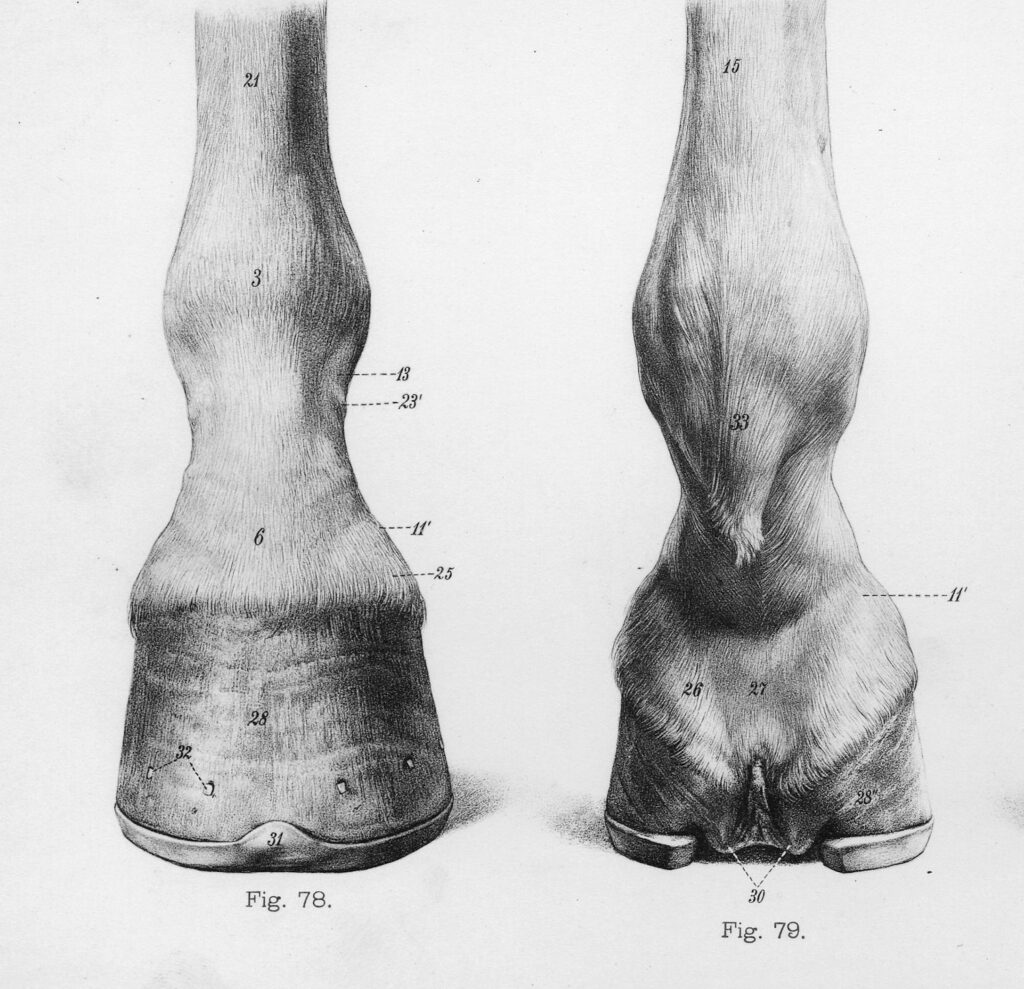
Foundation of Motion – The Structure of the Hoof
- 21 Tendon
- 3 Fetlock joint
- 13 Tendinous Band
- 23′ Lateral digital vein
- 6 Pastern joint
- 11′ Lateral cartilage
- 25 Coronet Band
- 28,28′ Toe part of hoof wall
- 31 Clip of horseshoe
- 32 Head of the horseshoe nails
- 15 Superficial flexor tendon
- 33 Fetlock tuft
- 26 Bulb
- 27 Bulb groove
- 30 Frog
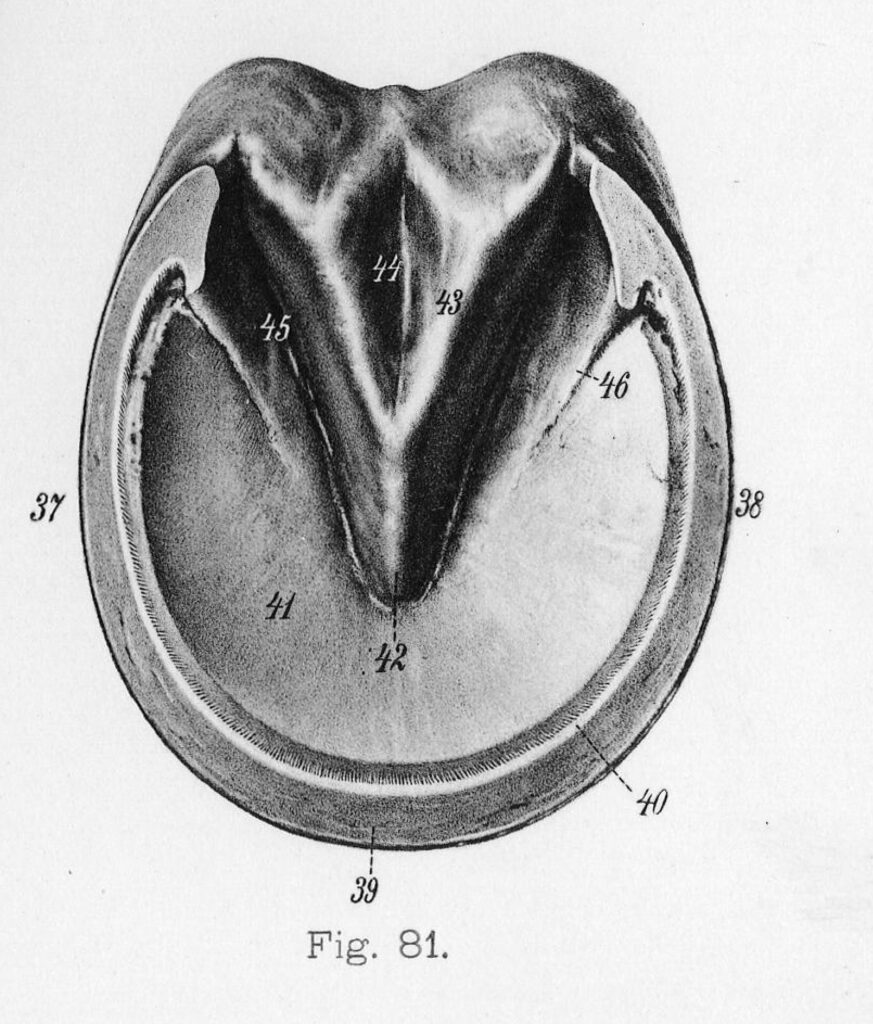
Strength Meets Sensitivity – The Hidden Architecture of the Hoof
- 37 Inner edge of th
- 38 Outer edge of the sole
- 39 Baring edge
- 40 White Line
- 41 Sole
- 42 Apex of frog
- 43 Branch of frog
- 44 Central groove of frog
- 45 Clefts of frog
- 46 Bar
Illustrations: Wilhelm Ellenberger and Hermann Baum, Public domain, via Wikimedia Commons
Key Takeaway
The structure of the horse hoof is a masterpiece of nature. Every layer, every part, serves a purpose. Together, they carry the horse’s full weight and allow it to move with power and grace. Therefore, I always treat the hoof as what it truly is — the key to a horse’s health, comfort, and performance.