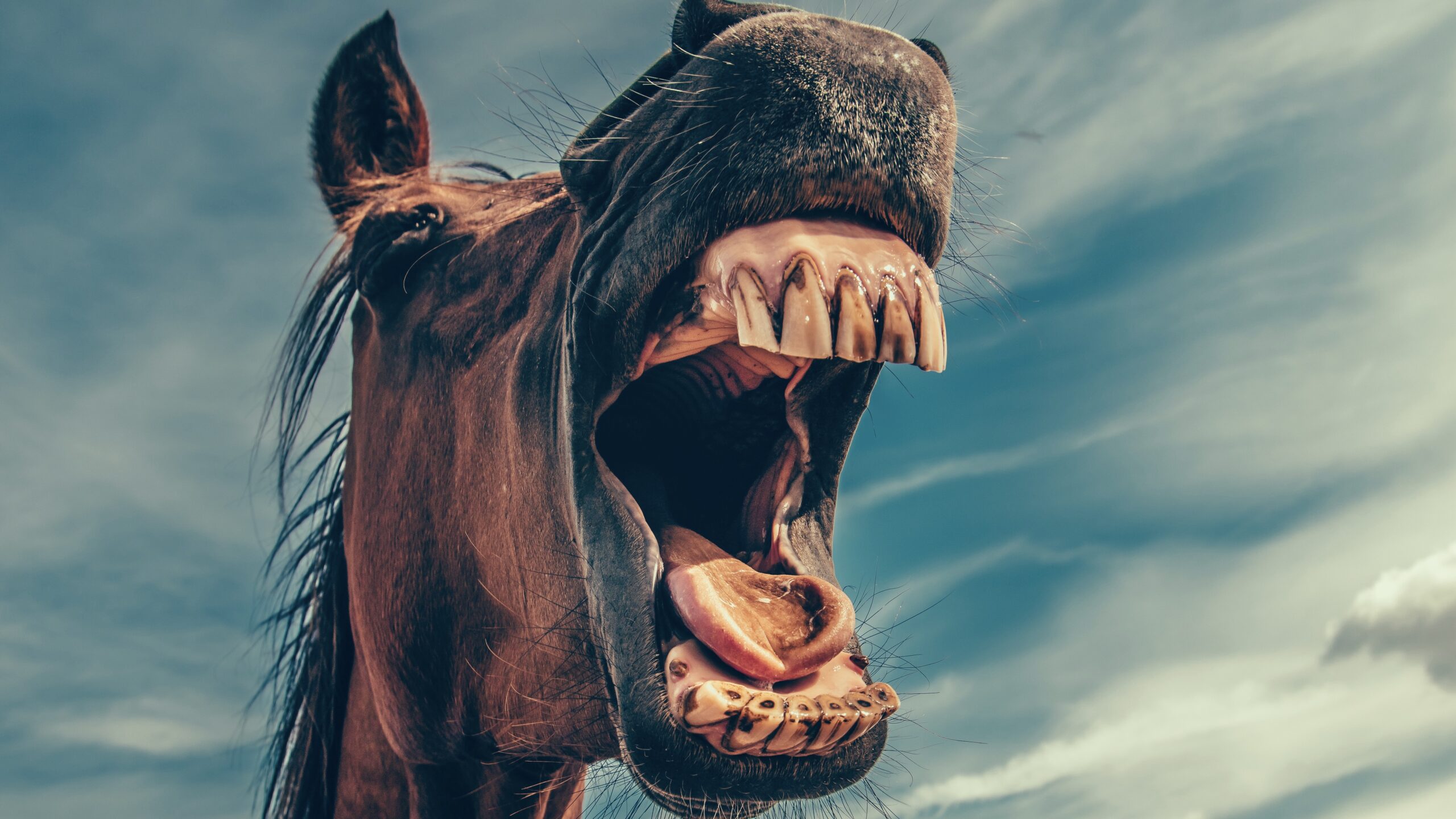
Riding starts where the bit rests. If the mouth hurts, the horse cannot soften, chew, and follow the hand. Therefore, the mouth decides about my horse’s rideability. And a horse dental check for riding issues belongs to every training plan, just like saddle fit and farriery. Moreover, it protects welfare first.
Teeth still follow “wild rules” in a modern stable
Your horse carries hypsodont teeth. They keep erupting over life. Therefore, the chewing surface changes all the time. In addition, small imbalances can grow quietly. So, I treat dental care like hoof care: I plan it, not just react to it.
Modern feeding can create uneven wear
In nature, horses walked and grazed for many hours. As a result, tough, abrasive forage supported steady, even wear. However, many modern rations shorten chewing time. They also reduce lateral jaw movement. Consequently, sharp enamel points can form on the cheek side of upper cheek teeth and on the tongue side of lower cheek teeth. Moreover, hooks, ramps, waves, and steps can restrict the jaw and strain the temporomandibular joint.
A quick map of the equine dentition
When you know this map, you spot what matters for the bridle, the bars, and the contact.
Adult horses have 36 to 44 teeth. That includes 12 incisors, 24 cheek teeth (molars), often 4 canine teeth and sometimes up to 4 wolf teeth.
Horses have 24 cheek teeth (molars). 12 are milk teeth (premolars) and another 12 are permanent teeth (molars).
In addition, about 40% of all horses develop up to 4 wolf teeth. Typically small and located just in front of the first cheek tooth.
Stallions, geldings, and sometimes mares also possess 4 canine teeth. Two on top and two on the bottom.
Horses’ teeth can advance roughly 1–3 mm per year. So the mouth keeps changing even in adulthood.
Mouth pain often hides inside “contact problems”
I never blame the horse first. Instead, I read the signs. For example, a horse may resist bridling, clamp the jaw, or open the mouth against the rein aids. Meanwhile, the same horse may feel tense in the poll and stiff through the topline. Therefore, when the contact suddenly deteriorates, I schedule a horse dental check for riding problems early in my troubleshooting.
What matters most for riders: function, not just teeth count
Incisors cut and grasp. Cheek teeth grind. This sounds simple. Yet function depends on balance between both. If incisors overgrow, they can limit proper grinding behind. In addition, sharp points can ulcerate the cheeks or irritate the tongue. That discomfort can change rhythm, straightness, and willingness. Consequently, the horse may protect itself with evasions rather than stepping honestly into the bit.
Young horses need extra attention during tooth change
Between roughly 2.5 and 5 years, the mouth changes fast. Loose caps can crack or remain partly attached. Then, erupting teeth may meet resistance. At the same time, many horses begin early ridden work. So, the rider feels “training issues” while the horse feels oral pain. For that reason, I plan checks more often in this phase. A horse dental check for riding problems can prevent weeks of confusion, because it separates education from discomfort.
Wolf teeth and the bit: when small things feel big
Wolf teeth often sit just in front of the first cheek tooth, most commonly in the upper jaw. Sometimes they sit under the gum. Even when eating looks normal, the bit and the cheeks can still trigger sensitivity in that region. Therefore, I stay precise: I do not assume every wolf tooth causes pain. However, I also do not dismiss it when I see head tossing, tongue evasions, or sudden bracing after the horse accepts contact. In those cases, I ask for a qualified evaluation and I include a third horse dental check for riding problems before I change bits, nosebands, or training plans.
Practical rider checklist: what I watch at home
First, I observe eating: slow chewing, quidding, dropping feed, or foul odor. Next, I notice handling: head shyness, resistance to the bridle, or tension around the lips. Then, I connect it to riding: inconsistent contact, grinding, one-sided stiffness, or an abrupt decline in willingness. Finally, I act early and book a qualified dental assessment.
International Dental Organizations
The following organizations list certified equine dental practitioners and help owners find contact details locally
Germany
Internationale Gesellschaft zur
Funktionsverbesserung der Pferdezähne e.V.
United Kingdom
France
Fédération Française des Techniciens Dentaires Équins (FFTDE)
United States
Belgium
Conclusion
I can only ride what the horse can comfortably carry. Therefore, I treat dental care as performance care and welfare care at the same time. If I want steady contact, calm chewing, and true suppleness, I stay proactive. And when I see red flags, I act early with a third horse dental check for riding problems instead of pushing through.