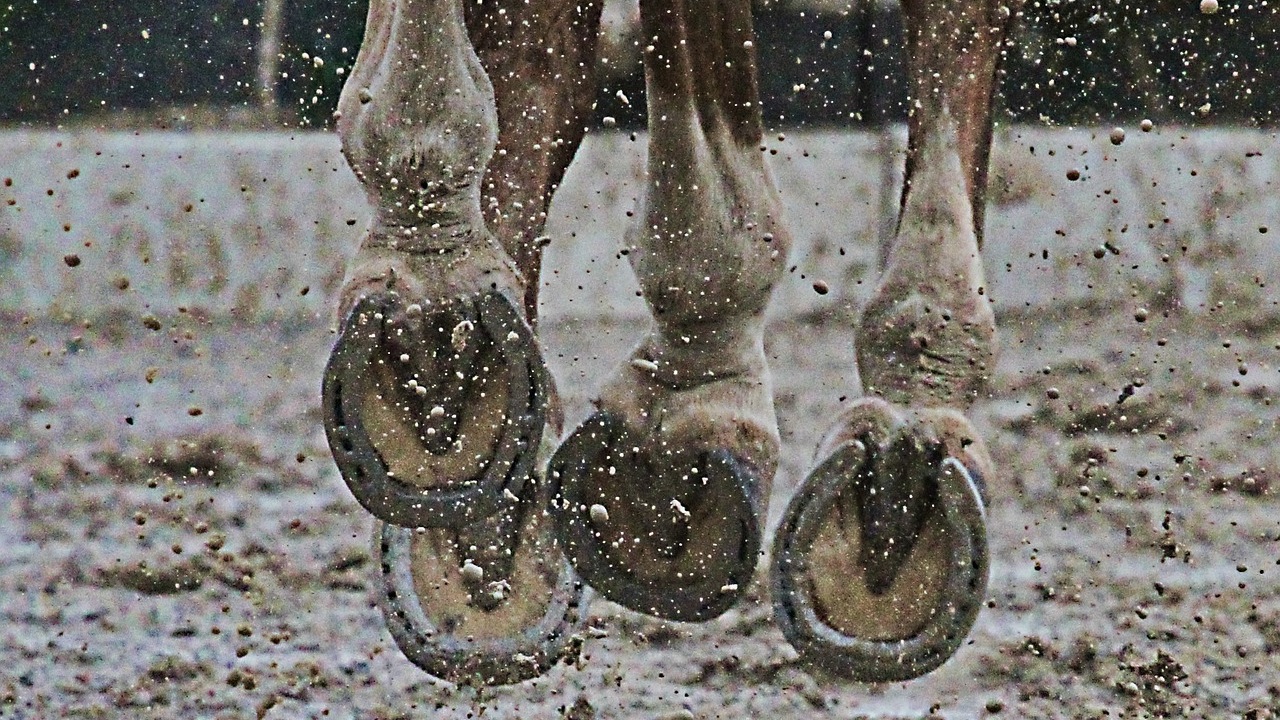
There is a well-known saying in the equestrian world: “No hoof, No horse!” They carry the horse’s entire body weight and must be strong, elastic, and well cared for. However, they are not just solid structures. Instead, they are living, responsive organs that absorb shocks and protect the legs from injury. Each hoof supports blood circulation, balance, and movement. Without their perfect function, no horse could perform, work, or simply enjoy freedom. When I take care for my horse’s hooves, I am not just grooming them — I am protecting the foundation for its life.
More Than Hard Horn
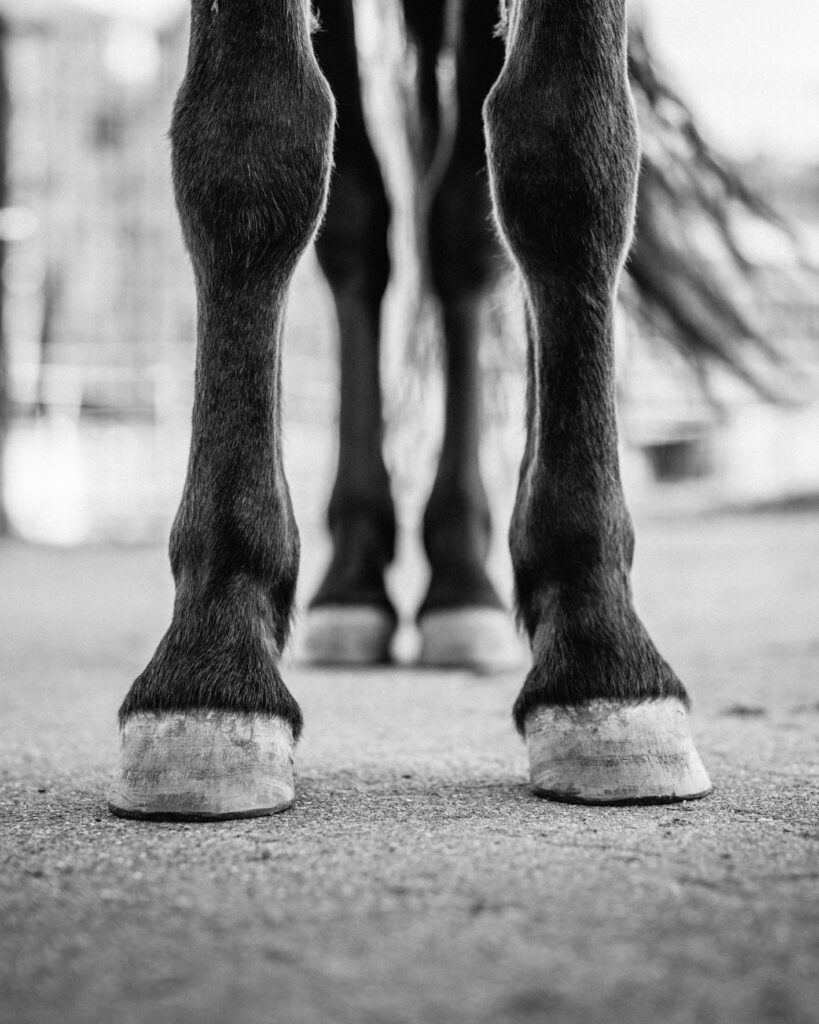
A horse’s hoof is not just made of hard horn. Hooves are sensitive organs full of nerve endings. In fact, they are surprisingly flexible and alive. This flexibility allows the hooves to stretch and contract slightly with each step.
When the hooves hit the ground, they change their shape to some degree. This means: The front edge moves backward and downward as the pressure is distributed, and the heels spread apart. When the hooves lift again, they return to their original form. This process is called the hoof mechanism. It acts like a natural, built-in shock absorber softening every step.
This mechanism prevents damage to bones and joints, especially on rough or uneven ground. Thanks to it, a horse can gallop, jump, or carry weight without pain or damage.
Feeling the Ground
The hoof senses the surface beneath it. Every single step on four hooves is full of sensory information. When the horse takes a step, the frog of the hoof touches the ground and transmits signals to the inner tissues. This helps the horse to recognize the surface. Through fine nerve endings, it detects if the ground is soft, hard, slippery, or uneven. This tactile feedback is transmitted through the body.
As a result, the horse immediately adjusts its posture. In this way, balance and coordination remain perfect even on uneven terrain. In addition twisting and injury are prevented. It also helps the horse to know exactly where each hoof is placed — whether on stone, sand, or grass. For this reason, walking on four hooves is more than just movement — it becomes a form of communication between the body and the earth.
Four Hooves, Four Hearts
I often say that horses have four extra hearts. One main heart and four in their hooves. The four hooves act like additional pumps that support blood circulation. When the horse moves, pressure and relief in the hoof pump blood up through the leg. When the hoof lifts, it creates a suction effect that draws in fresh blood. This blood circulation supports the entire body and cardiovascular system. It improves oxygen flow, supplies the tissues with nutrients, and keeps it healthy.
So every step strengthens not just the muscles, but also life inside the horse. Therefore, regular walking on four hooves is essential for good blood circulation and overall health. Without this, a horse’s heavy body could not function as efficiently as it does.
Regular Care for Healthy Hooves
Hoof care is essential as hooves grow continuously. The hoof wall grows about one centimeter per month. The sole, frog, and lamina also grow continuously. That’s why I make sure a farrier visits my horse regularly. The interval depends on the growth rate and the stress on the hooves. As a rule, farriers adjust the schedule for shod horses every six to eight weeks. In summer, faster growth demands more frequent attention. In winter, slower growth allows for longer intervals.
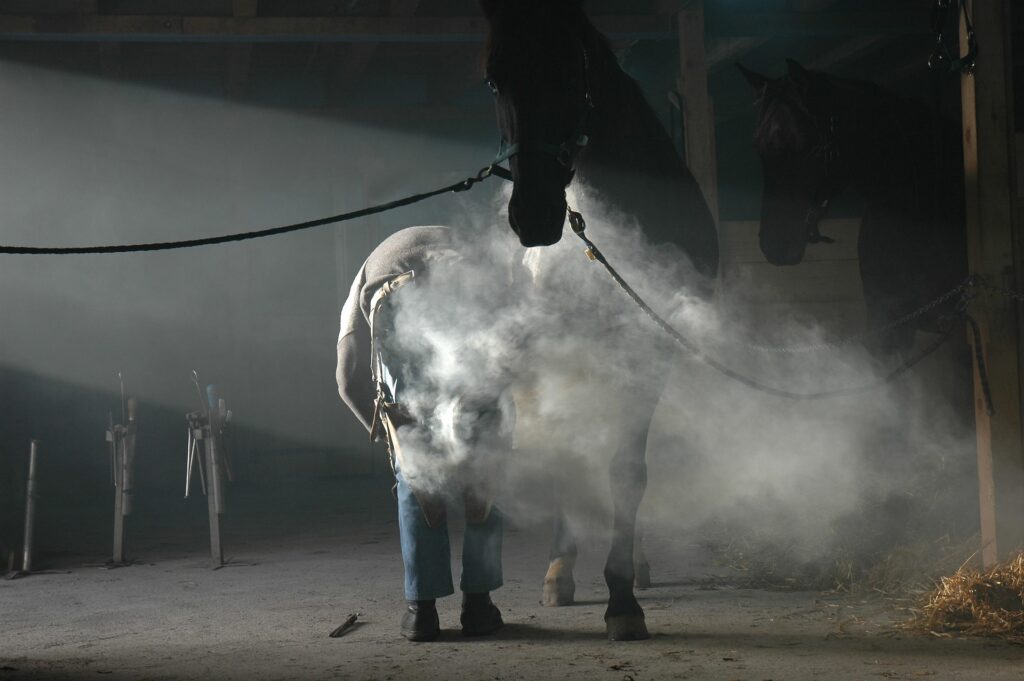
Even barefoot horses require trimming — usually every six weeks in summer and every eight weeks in winter. Clean and balanced hooves also mean better movement and fewer health problems. If cracks or diseases such as laminitis occur, early treatment makes all the difference. Therefore, consistent trimming prevents cracks, imbalance, and pain. For me, this care is not cosmetic — it’s a duty out of respect.
Water Over Oil
When it comes to hoof care products, I prefer simple solutions. I know that a healthy hoof must stay elastic to prevent cracks. Many believe that oils or fats protect it, but I have learned that water is best — and many experts agree. Therefore, best care often starts with clean water. Hoof horn needs natural moisture to stay elastic.
Oils and fats can block this moisture from entering and dry out the hoof. Instead of heavy oils or fats, I rinse the hooves with clean water and sometimes mild soap. Then I let them dry naturally. If I do not want to go without oil, I only do so after cleaning and drying. And once a week is enough to keep the hooves healthy and resilient.
Finding the Right Hoof Angle
Experts often refer to the “toe angle.” Ideally, the front hooves should have an angle of 45 degrees and the hind hooves an angle of 55 degrees. But in reality, however, few hooves meet these standards. Deviations of up to 15 degrees can still be healthy. What matters most is the harmony between the angle of the hoof and the pastern. Each horse is unique, and so are its hooves.
Nutrition and Hygiene Matter
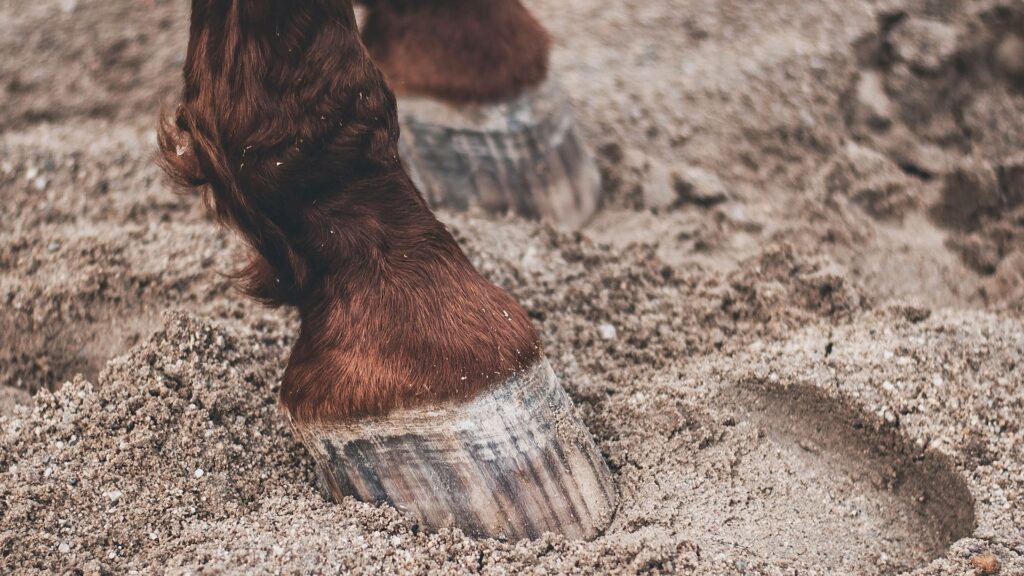
Healthy hooves start with good hygiene. Clean bedding and dry stables are essential. Nutrition also plays a vital role. A healthy and strong hoof grows from the inside out. Biotin helps in the formation of keratin, the protein that makes up the horn. Some studies suggest that biotin supplements can improve horn quality, though results vary. Minerals such as zinc, copper, iron, and calcium strengthen the structure and stability.
Moreover, good hygiene prevents infections that could affect the entire leg. Clean bedding and regular cleaning prevent infections. When combined with balanced nutrition, exercise, and professional care, they create the best foundation for walking on four hooves. Personally, I focus on balanced feeding and natural care. To boost blood circulation, I sometimes massage the coronet band and heel bulbs with a soft brush and a drop of laurel oil.
takeaway
Once I understand a horse’s hoof, its care becomes simpler and more logical. I see the function of each individual part. Then I can make better decisions about hoof trimming, footing, hygiene, and and nutrition that supports real horn growth. And that is how I protect the very foundation of my horse’s health – every single day.