
The ears of a horse are a masterpiece of nature, designed for survival. They move so precisely that I am constantly impressed by them. Horses rely even more on their hearing than on their eyesight. Their eyes see almost 360 degrees, but their ears go even further—they perceive sounds from all directions without blind spots. They function like tiny radar systems, mood indicators, and emotional messengers. Constantly in motion, they scan the air for every sound. Even when at rest, they never stop working. For me, this proves how much hearing supports a horse’s survival and communication.
Horses are Masters of Hearing
Horses are true artists when it comes to hearing. Their world is full of layers of sound that they can decode instantly. Since they cannot rely on sharp depth perception, their hearing fills this gap. When a predator approaches quietly, the horse’s ears take control. The slightest crack of a twig or rustle of leaves can trigger an immediate response. I have seen horses freeze or jump at sounds that we can barely notice. This is their built-in early warning system – always active, always ready.
Each of a horse’s ears moves independently. Sixteen finely tuned muscles allow it to turn almost 180 degrees. This independence allows the horse to hear from all directions without turning its head. While I have to move my whole body to locate a sound, a horse can do so effortlessly. This freedom of movement keeps it alert to everything happening around it.
Horse Ears Ensure Perfect Balance
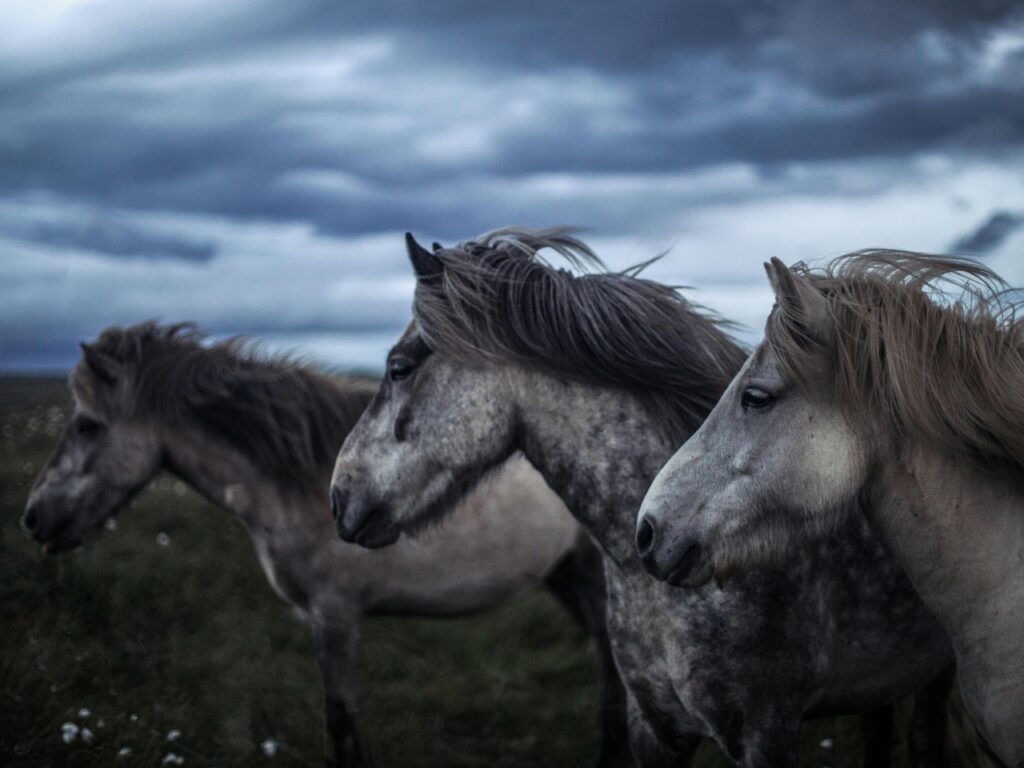
However, hearing is not only about detecting danger. The ears of a horse also help it to maintain its balance. Deep inside lies the organ responsible for orientation. Without it, no horse could stand, walk, or gallop so gracefully. The signals from these inner structures are transmitted directly to the brain, allowing the horse to maintain stable vision even when moving its head. Finally, the shape of the ears ultimately depends on their breed and origin. Warm-blooded horses have larger ears, a trait inherited from their ancestors in warm climates. Horses from cold regions, such as Icelandic or Norwegian breeds, have smaller ears to protect them from frost. Even this small difference shows the precision of nature.
Dance of the Horse Ears
When I watch horses, I notice that their ears never stand still. They are constantly moving, scanning their surroundings for clues. A new sound makes them pause, tilt an ear, and often turn their head to locate the source of the noise. This alertness shows how important hearing is to their sense of security.
Beyond Human Hearing
Horses hear what I cannot hear. Ultrasound is not only part of medical imaging. It surrounds horses in their daily lives. They can hear ultrasonic frequencies — sounds far beyond human hearing. My ears stop at around 20,000 hertz, but a horse can reach up to 38,000 hertz or more. This means it hears sounds I do not even know exist. Horses hear the high-pitched sounds of small animals, machines, or alarms that are inaudible to us. These sounds can confuse or even frighten horses. Their exceptional hearing may also help them communicate via subtle sound waves we do not yet fully understand.
The ears of a horse tell stories. Pointing forward signifies attention. Turned back means irritation or warning. Hanging to the sides signifies relaxation. When I observe a horse’s ears, I can read its emotions like an open book. Rapid ear movements often indicate confusion – the horse tries to decide what is most important. Understanding these signs helps me build trust.
Silence Speaks the Loudest
Loud noises can cause real pain and stress. I have seen horses flatten their ears to protect them when people shout or music blares. This is their way of covering their ears, just as we would do with our hands. Calm and gentle voices, however, build trust. Horses respond best to soft tones — a quiet word says more than a loud shout. I always try to speak softly. Whispering calms them. It feels like a promise of safety. Horses evolved to be quiet animals. In the wild, loud sounds meant danger. Understanding this helps me become a better partner.
Their ear movements also tell us a lot about how they feel. Ears pointing forward show curiosity and attention. Flat ears warn of fear or anger. Relaxed ears mean peace. I always observe this subtle language, because it reveals what words never can.
Wind Changes Everything
Wind can unsettle even calm horses. It multiplies sounds and scatters them in strange directions. Suddenly, a horse can no longer tell where a noise is coming from. Its survival instinct is awakened. The body tenses, the head lifts, the muscles tighten. I always notice how their ears flick nervously, trying to to interpret the movements of the air. The wind mixes smells and sounds, shifting them from one side to the other. For a prey animal that relies on clear signals, this confusion feels dangerous. That is why a calm, confident rider becomes the horse’s best reassurance. I have learned that on windy days, my horse needs extra reassurance. My calm voice becomes its anchor.
Listening to the Listener
For me, understanding the ears of a horse means understanding the horse itself. They are not only a tool for hearing, but a reflection of the animal’s emotions, instincts, and intelligence. Whenever I watch their ears turn, twitch, and listen, I am reminded how deeply they are connected to the rhythm of life. When I study the ears of a horse, I see a combination of sensitivity, survival instinct, and soul. They are nature’s masterpiece, combining hearing and emotion in one graceful movement. Through their ears, horses speak a silent language – one that I can learn if I just take the time to listen.